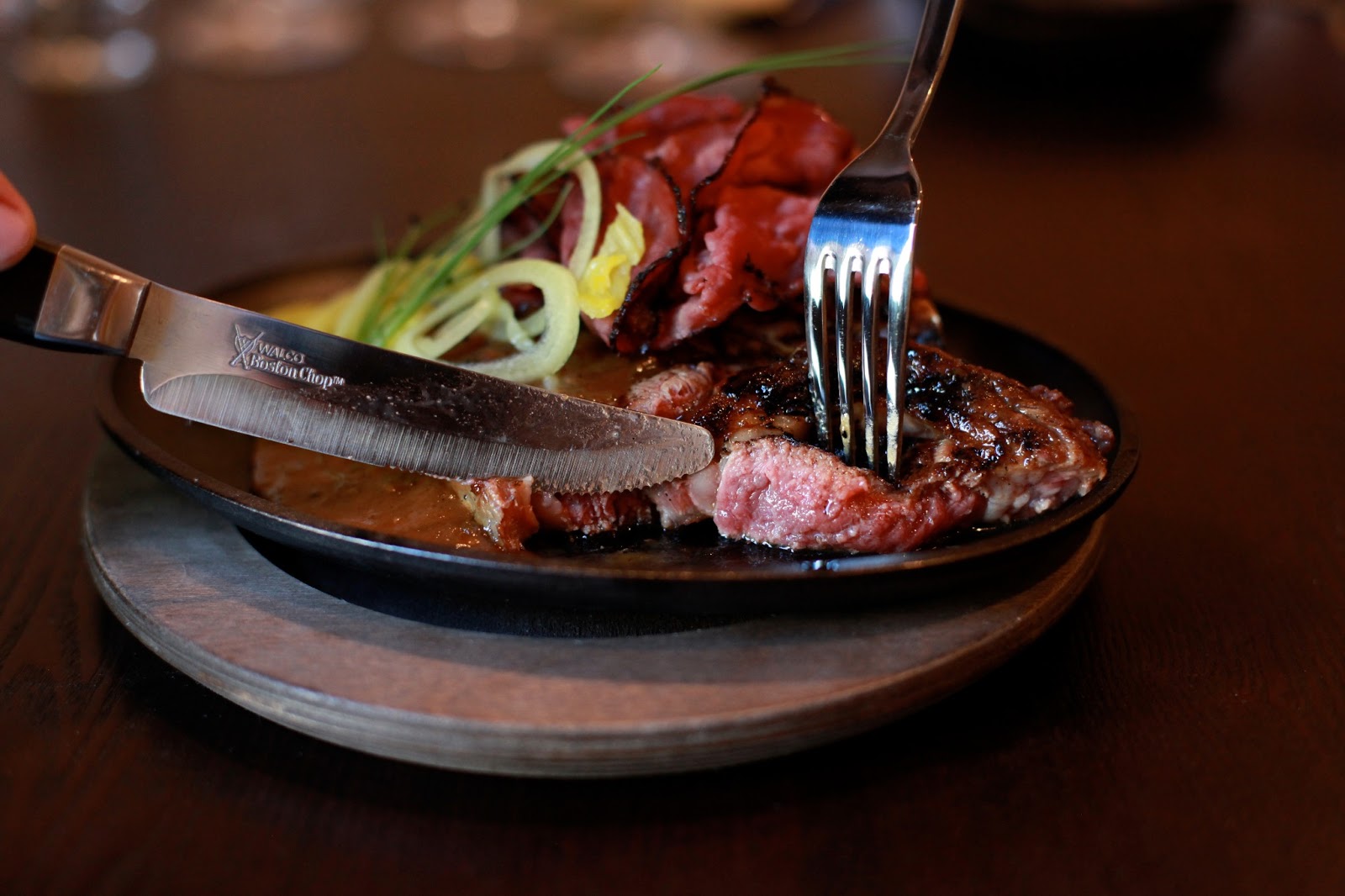
At Palo Alto Grill, we have a really special way of cooking chicken. It is crispy and breaded on the outside, yet the inside is tender and succulent, like poached chicken. We achieve this using a technique called Sous Vide.
I am lucky to have been trained in the science of cooking sous vide by Bruno Chemel of Baumé Restaurant, who taught as the chef instructor of Joël Robuchon's School of Sous Vide in France. Bruno has continued to practice and perfect the technique of sous vide for over 20 years. Sous Vide is an interesting process and one which is currently highly controversial. There are even certain states and cities which consider its use illegal. Here in California, for a restaurant to cook sous vide, a Chef must first write a very complicated guide, detailing all the processes performed at that restaurant, a copy of which is kept on file at the Health Department. Ironically, at the same time as all of these regulations get tighter and tighter for the professional, more and more cookbooks and tools are released to the home cook for sous vide cooking!
 As most people are aware, in the time before refrigeration, almost all meats were prepared by braising or stewing at extremely high temperatures. This, of course is if they weren't preserved through curing, confitting or smoking, etc. Now that refrigeration is a common practice, people are more accustomed to eating meats cooked at a much lower temperature, (medium-rare, rare, raw, etc) a practice once considered very dangerous. These days, we realize that cooking meat to a lower temperature results in meat which is more moist and more tender. Sous vide is the next step in this evolution. Instead of changing the temperature TO which meat is cooked, sous vide changes the temperature AT which meat is cooked. The reason it is considered such a dangerous process is because many of the chefs who practice sous vide are not properly trained to handle the dangers and exercise the proper controls over these dangers.
 Though it may seem small, one of the most important factors to consider in cooking sous vide is the wearing of sterile gloves. On our hands are two types of bacteria: aerobic and anaerobic. Most aerobic (oxygen-breathing) bacteria are relatively harmless to people, comparatively. Because of competition with these stronger aerobic bacteria, anaerobic bacteria (non-oxygen-breathing) have a difficult time thriving and therefore rarely exist in dangerous proportions. However, when oxygen is removed from an environment (as in canning or sous vide) the aerobic bacteria die and the anaerobic (such as botulism!) thrive. Therefore, gloves are critical when cooking sous vide. Most cookbooks and internet websites which teach sous vide miss out on many of these controls and dangers.

<-This is a 38 North Brand Bassian Farms Chicken. It is the finest animal I have ever had the opportunity to work with. (38 North comes from the fact that these chickens are raised 38 miles north of the Golden Gate) They are rich and flavorful and the skin adheres beautifully to the flesh, which is very important for this application.
Firstly, break the chicken down as such:
(Note: if for some reason you do not have access to the equipment or materials necessary to prepare this chicken sous vide, a delicate poach or very light simmer in chicken broth for about an hour before chilling, carving and breading would produce an extremely similar product)

To vacuum the breasts, put them back to back, to prevent the bones from tearing the bags under vacuum. Remember: Cut bones cut bags.

Sous vide the chicken at 145 degrees Fahrenheit for 2.5 hours.
Once it is cooked, chill the chicken in an ice bath before fully chilling in the refrigerator.
Once it is cooked, chill the chicken in an ice bath before fully chilling in the refrigerator.
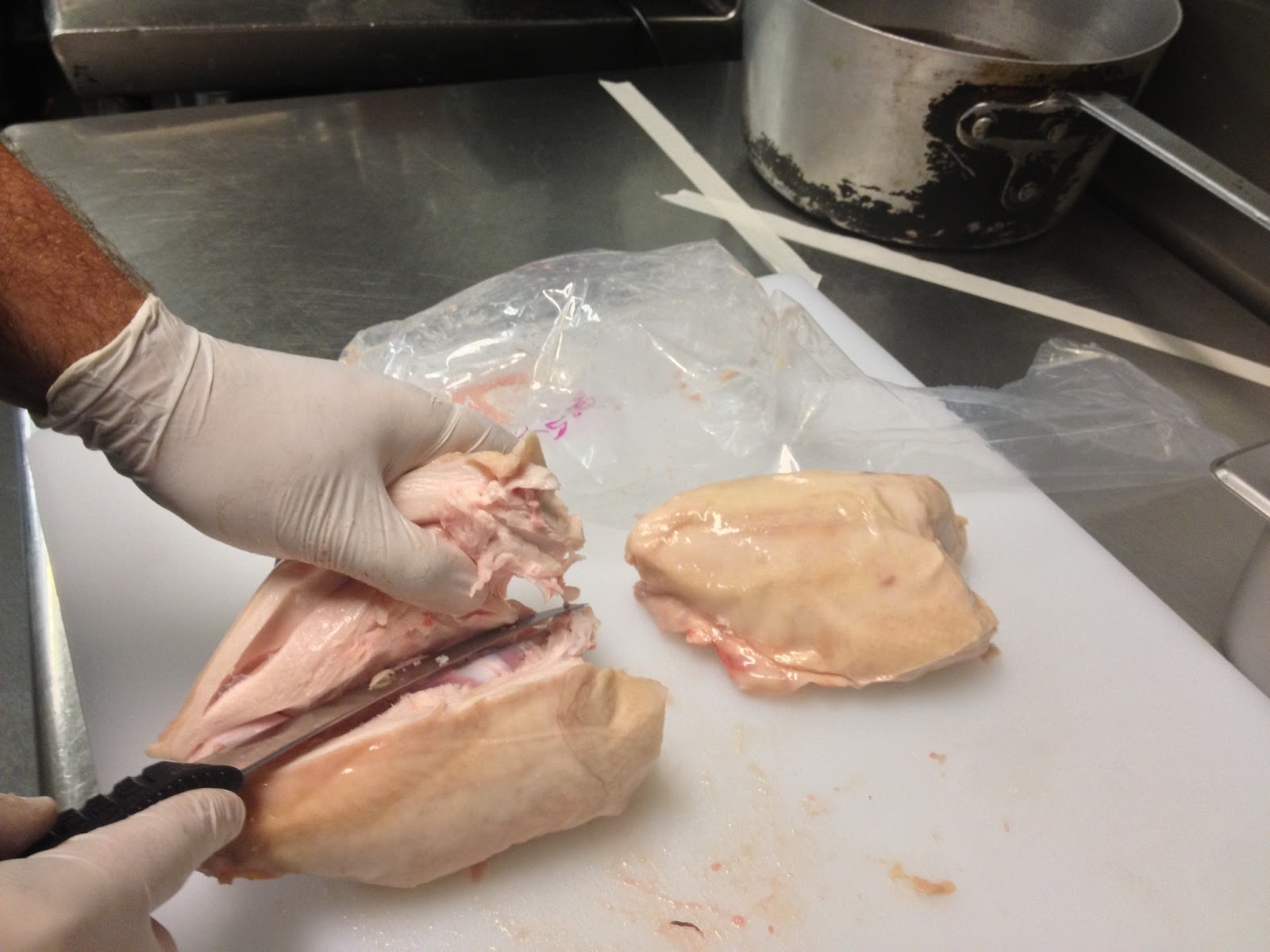
Once fully chilled, carve the breasts off of the chicken.

Marinade the breasts for at least 6 hours or overnight in buttermilk and your favorite dry rub or spice mix. We use our cowboy steak seasoning.


Once the chicken breasts have finished marinating, dredge them in all purpose flour mixed with dry herbs and more spice mix.

The chicken can be fried now, but its still better to wait 2-3 hours or until the dredging looks soggy.
<-Like this

Once soggy, dredge lightly once more and fry at 350F until well browned.


 Serve with Grilled Apples
and Dijon jus-glazed Chestnut Biscuits

Halve, and present, moist and glistening, on sauteed greens.
By doing the initial cook on the bone, the chicken maintains its maximum flavor and moisture.

Finish with fleur de sel and baby sage.

Sauce liberally tableside with Dijon Jus.

Cool beans.